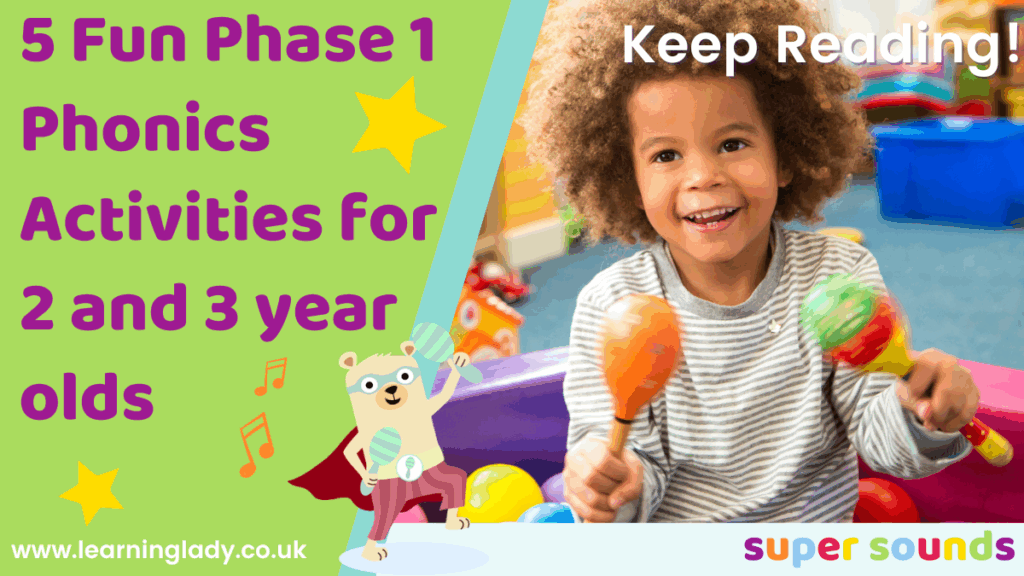
In our Nursery, we knew that Phase 1 phonics activities are the essential foundation for any phonics programme, and we needed our preschoolers to be ready.
Where to start with 2 and 3 year olds
As phonics is a sounds-based system, the priority for our 2- and 3-year-olds was to begin at the first step along this path; listening to, and remembering, the similarities and differences in sounds.
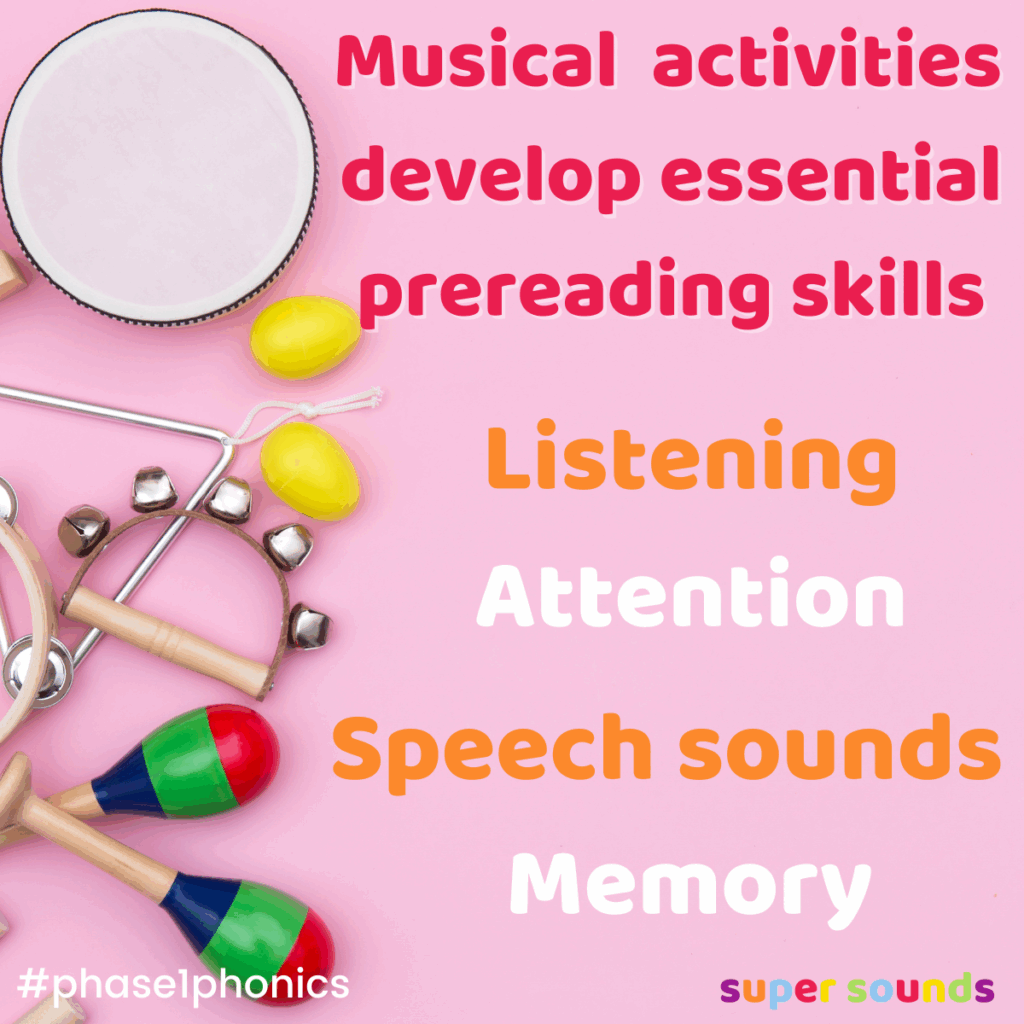
We also knew that, for these essential prephonic skills to stick, the children would need to understand a lot of new language.
This is the story of how some super successful listening and language-based phonics phase 1 activities prepared our children for phonics spectacularly well.
Phase 1 phonics games are the foundations for reading

Phase 1 phonics games help 2- and 3-year-olds develop the essential skills they need to be reading ready. Initially these begin with real life or musical sounds, before moving on to abstract sounds matched to letters.
At 2 and 3 years old, prephonic development ensures that:
· Ears hear similarities and differences in sounds.
· Brains remember sounds matched to symbols.
· Mouths work with the brain to talk about sounds.
Our philosophy was to model, practise, and repeatedly play with as many kinds of sounds as possible to develop these skills in a step-by-step progression.
Choosing the right phonics games phase 1
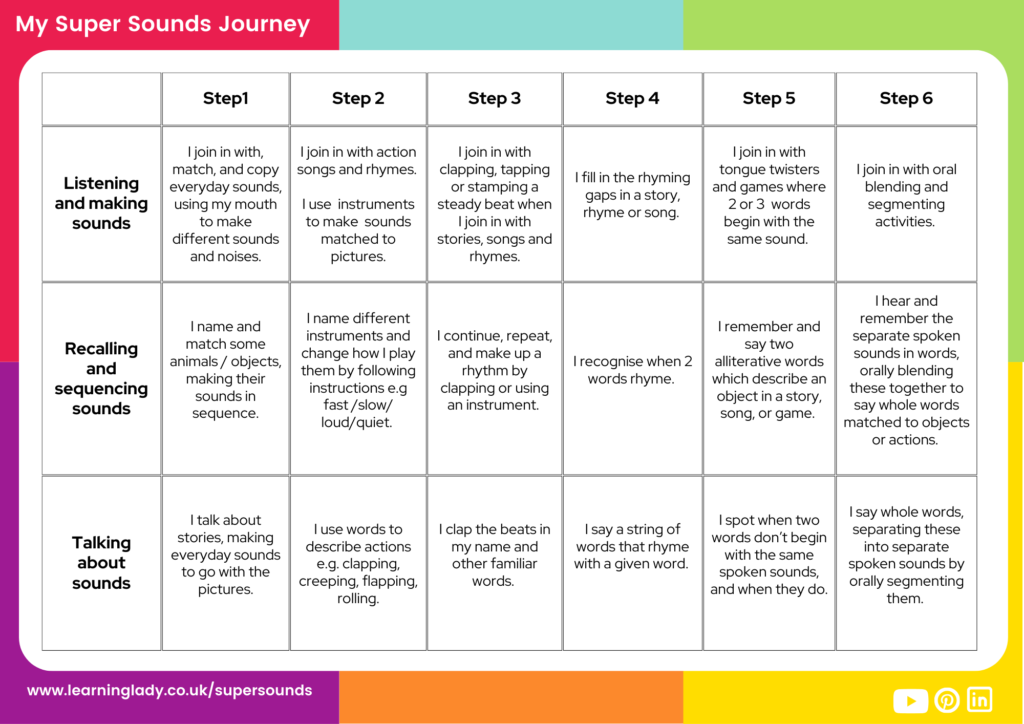
To make sure our phonics games phase 1 matched the needs of all of our children, we used this super simple prephonics skills document.
It helped us consistently celebrate success towards reading with families, and pinpoint next steps to support planning.
Hearing similarities and differences is a vital prephonic skill
Like many other nurseries working on prephonic skills, we began by introducing our youngest children to the sounds made by animals and familiar objects.
Games like this were really popular with our children and families.
Phase 1 phonics activities for 2 and 3 year olds
Our youngest children began playing phase 1 phonics activities, naming everyday sounds matched to objects and animals. This was brilliant for building initial confidence.
But for prephonic development to have a long-lasting impact, we needed to go deeper. Simply providing the experience of listening games would not be enough to prepare our children for reading.

We decided to have a big focus on the language that describes the similarities and differences in sounds, because this commonly gets in the way of understanding how sounds work in words.
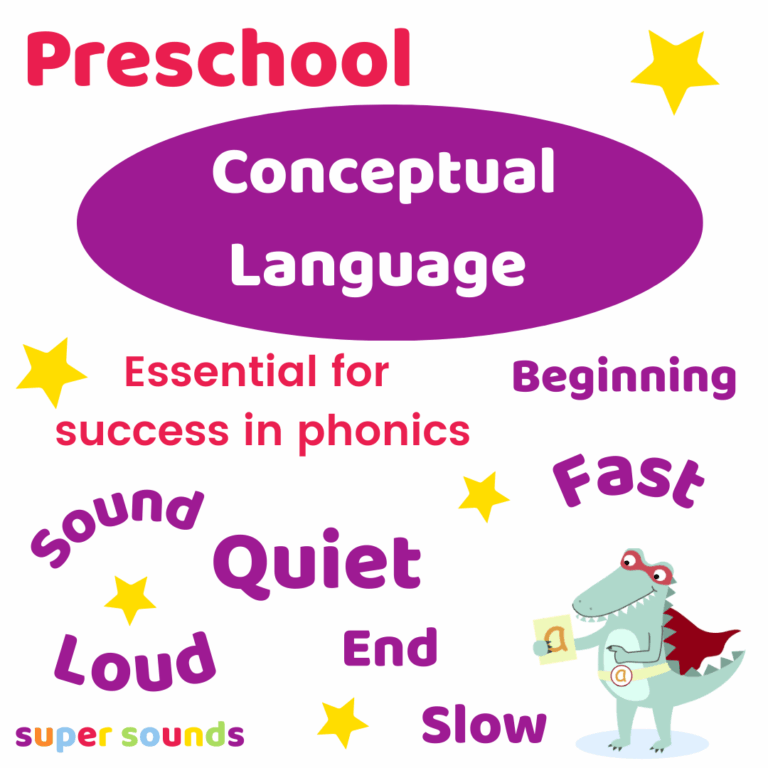
The types of words our youngest children needed to understand were not those we’d first suspected. For years, I’d believed that it was easy as simply knowing that a dog makes a barking sound, and a cat says “meow”.
The language that makes the biggest difference to understanding how sounds work in words is conceptual.
These words are abstract, not relating to a specific person, object, or action. Conceptual words rely on a range of experiences in different contexts to embed meaning.
Phase 1 phonics next steps...
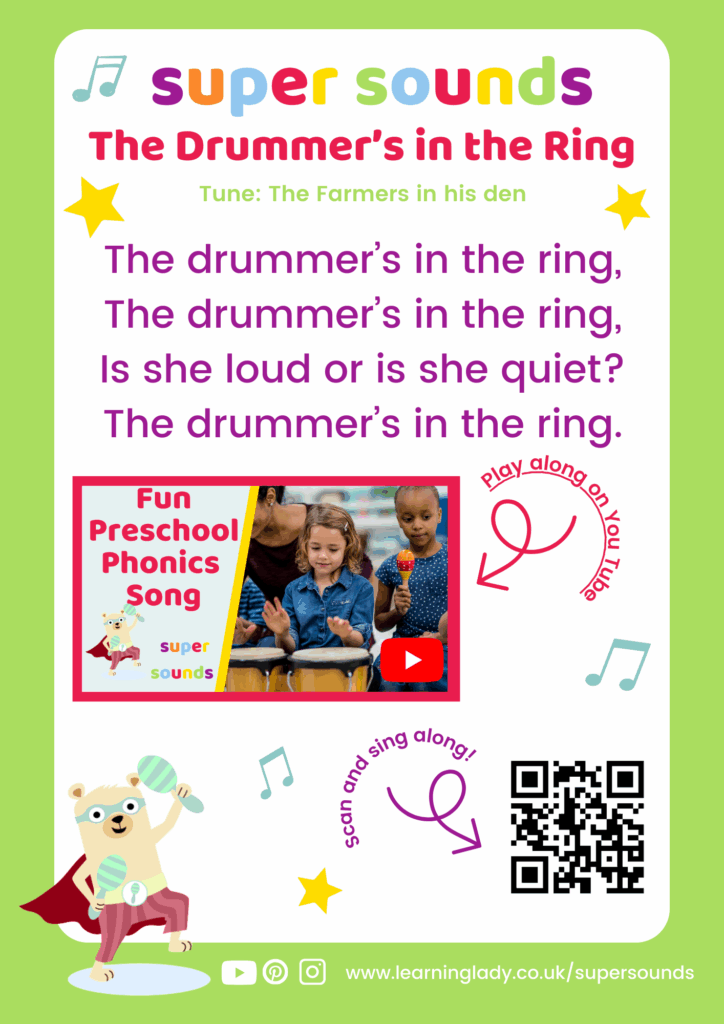
We decided that our phonic phase 1 would begin by deepening understanding of 2 key concepts, critical to success in phonics later.
An awareness of the difference between loud and quiet sounds.
An awareness of the difference between fast and slow sounds.
How preparing playing Phase 1 phonics games made a world of difference
The End Goal | Voiced and Unvoiced Sounds
To be ready for phonics, phase 1 phonics games need to introduce the subtle differences in sounds, rather than just the obvious ones.
Some sounds like ‘a’ use the voice and shape of the mouth to articulate the sound.
Other sounds like ‘p’ are unvoiced. The sounds is created by the lips and control of breath, rather than the voice box itself. These are much quieter sounds.
These sounds are noticably different because one is louder than the other.
The End goal | Short and long sounds
Some spoken sounds like ‘s’ are long and stretchy. These are slow sounds.
Other spoken sounds like this include:
z, m, f, n, r, v, sh
Some spoken sounds are short and bouncy. These are faster sounds.
b, c, d, g, j, o, ch
What comes after phase 1 phonics sounds
Here’s an example of how to say each of the phonics sounds introduced in every phonics programme. See if you can hear the difference between those that are stretchy, bouncy, voiced, and unvoiced.
Letters and sounds phase 1 games using instruments
With the key conceptual language identified, we recognised that playing letters and sounds phase 1 games using musical instruments would be a great way to model and repeat the core vocabulary linked to describe different sounds.
The very best phase 1 games using instruments
Here are some of the super simple musical phase 1 games we played to develop essential prephonic vocabulary with our children.
Taken from the Super Sounds prephonics programme, these were firm favourites with our 2- and 3-year-olds. They also benefitted from learning how to join in and take turns too!
Phase 1 Phonics Activities |
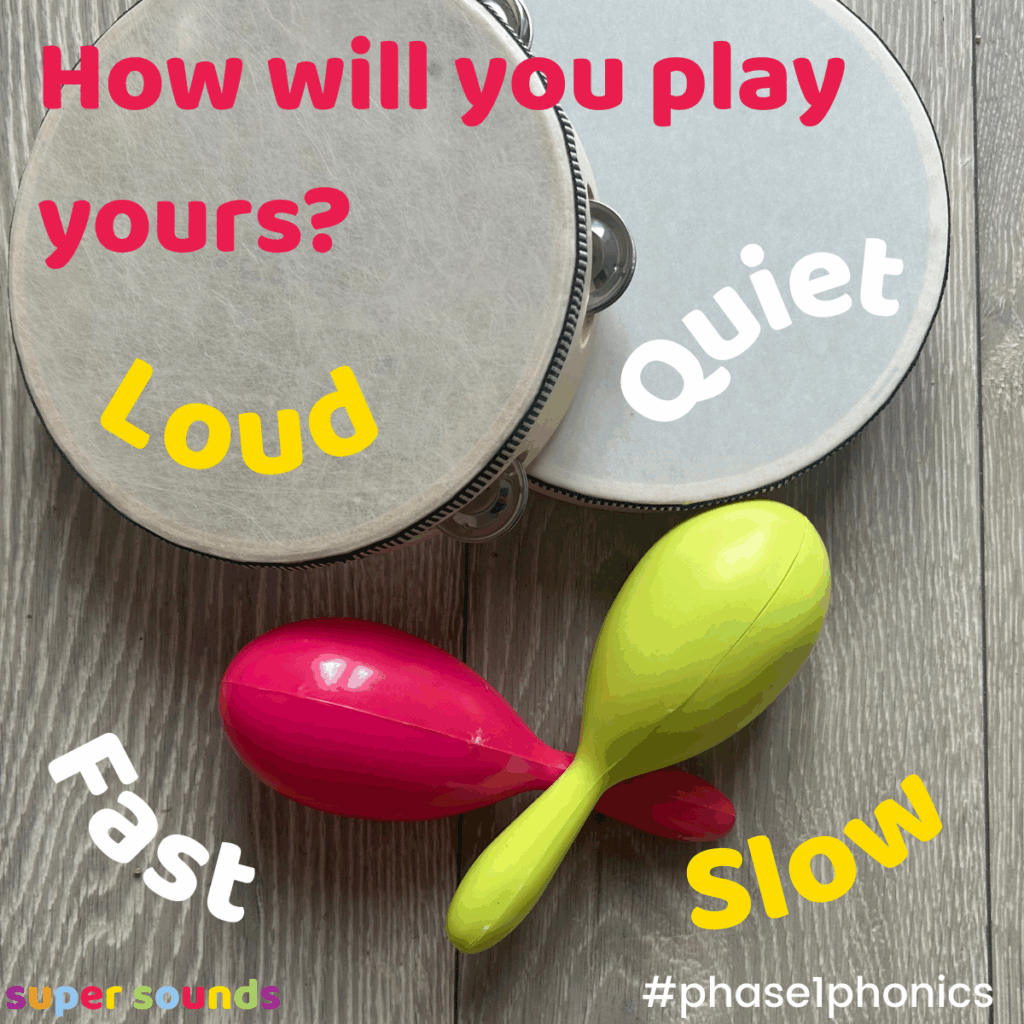
The Drummer's in the Ring
All you need for this preschool listening game is a drum or something to bang! At our Nursery, we had a curtain for the drummer to hide behind so we couldn’t see them play. This added to the excitement, and the other children couldn’t wait to be drummers too!
Phase 1 Phonics Activities | The Traffic Light Game
This is a super simple, relatable game for 2 and 3 year olds and great to play in different ways. Choose whether to play the game to teach fast and slow or loud and quiet, play using musical instruments or adapt the sounds you can make with your bodies and voices.
Which Instrument?
As our Nursery children grew in confidence and began to acquire more language, we were eager to build in listening activities to develop new words. This super simple musical game was a great way for staff to model words to describe sounds in different ways.
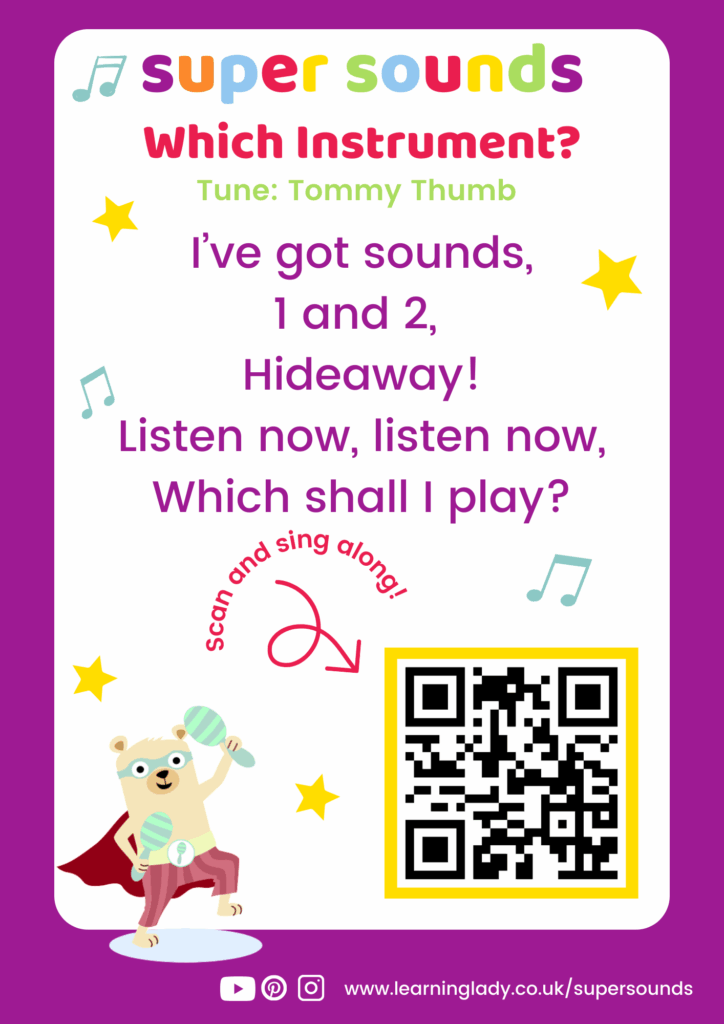
The Which Instrument Song is just one of the featured songs in the free Super Sounds Songbook.
It includes lots of easy-peasy songs that develop essential prephonic skills, including:
- Simple song words
- Instant live streaming links to get started straight away.
Where's Rudolf?
The nursery children LOVED this Christmas version of noisy hide and seek. We played this game making fast and slow sounds throughout December and the children soon started playing it independently too!
Phonics Phase 1 at home or nursery
As the children made progress and we noticed the impact these super speedy games was having on their development, we wanted to share what we’d learnt with our families. The children loved continuing to name and match sounds as they played interactive games at home and nursery.
Phonics phase 1 games with superpower!
Overtime, our 3 year olds began to use the new words we introduced during all kinds of play and learning situations, not just during our phonics phase 1 games.
We noticed that our children were much more equipped to explain their thinking and articulate choices about the instruments they wanted to play and how they wanted to play them. By the time they went to school, we were delighted that they were all ready for reading.
Nursery Phonics Planning
If your 2 and 3 year olds had fun playing these super successful phase 1 phonics activities and you want to continue the prephonics fun, then you’re going to love Super Sounds.
It’s an evidence-based, tried and tested prephonics programme, designed specifically to prepare all children for every phonics programme
Super Sounds is a unique, fun, and engaging approach to teaching a progression of prephonic skills step by step and it’s easy peasy to get started with next to no resourcing required.
Whether you want fresh ideas as an alternative to Phase 1 Phonics, or you’re new to phonics in nursery and don’t know where to start, Super Sounds is the breathe of fresh air you need!
Working with 2, 3 and 4 year olds and want to work with a team of Nursery Phonics Experts?
The Super Sounds Bargain Bundle is exactly what practitioners and Early Years Leaders like you have been looking for. everybody’s been asking for!
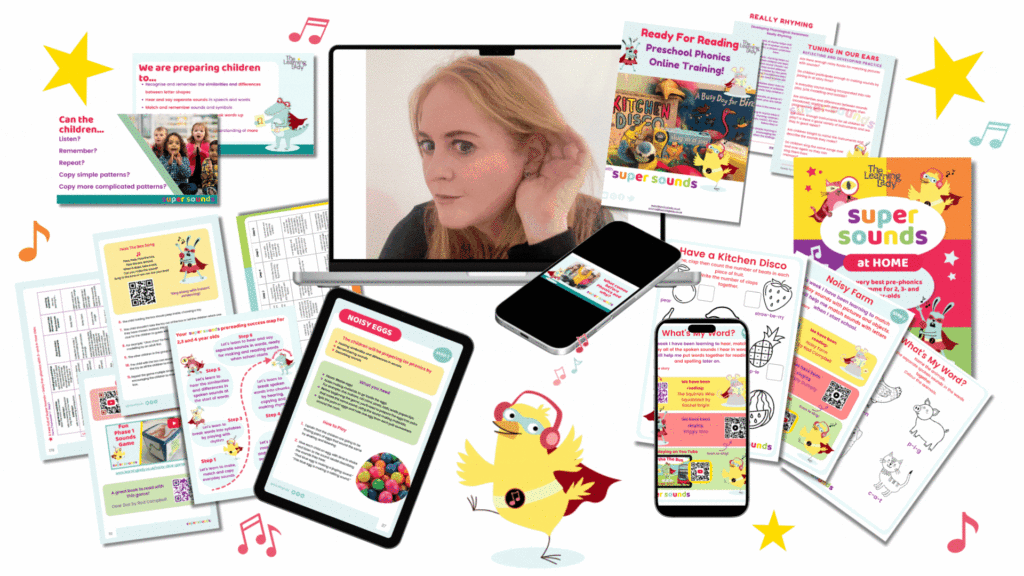
The Super Sounds Bargain Bundle is the super successful, research-based prephonics and alternative Phase 1 Phonics toolkit that’s well loved by thousands of early years providers and their children.
Including:
- Immediate access to on-demand Ready for Reading Nursery Phonics Training
- An instant downloadable copy of the award-winning Super Sounds Prephonics programme, that guarantees results.
- Distinctively different downloadable home learning, perfect for busy parents and children who need to keep practising.