Looking for super speedy phonics phase 1 game ideas, perfect for 2 and 3-year-olds?
Tired of playing the same listening games with your EYFS children?
Here’s some instant inspiration that actually works.
These super simple phase 1 phonics ideas are loved by the staff and children at Bright Beginnings Nursery.
When we began working together, the team needed some new, engaging ideas for a particularly active group of children who were struggling to listen and remember.
These easy-peasy activities worked a tre

Why are phase 1 phonics games that develop listening important?
Phase 1 phonics games that develop listening are a critical first step in learning to read using phonics.
Phonics is a sound-based system, so the end goal for preschoolers is to hear the similarities and differences in sounds matched to letters.

At 2-3 years old, this journey begins by making sure little ears are attuned to the similarities and differences between sounds around them.
4 year olds will never learn to hear the difference between ‘f’ and ‘th’ or ‘m’ and ‘n’ (which are very similar), if they can’t tell the difference between a cow mooooooing and a horse neighing first.
Phase 1 phonics sounds at 2-3 years old
We can do much to prepare our 2 and 3-year-olds so they’re ears and brains are ready for reading. Here’s an example of phase 1 phonics sounds that’s perfect for this age group.
Similarities in phonics sounds in school
Fast forward a couple of years, here’s an example of the first phonics sounds children learn in school. It’s useful to know how similar, and how quiet, some sounds are.
Successful letters and sounds phase 1 games for 2 year olds
The phonics phase 1 doesn’t just involve hearing the differences and similarities between sounds.
When formal phonics lessons begin at age 4, children must also learn to match letters to sounds with good sound-symbol correspondence.
Successful letters and Sounds phase 1 games prepare 2 and 3-year-olds by introducing the concept of matching sounds to symbolic representations using objects or pictures.
Matching spoken sounds to objects or pictures in the real world is the perfect preparation for matching abstract spoken sounds to letters later.
Phonics games phase 1 that start with a story
Matching phonics games phase 1 with interactive stories brings this sound-symbol relationship to life.
The children at Bright Beginnings Nursery happily matched animal pictures with their corresponding sounds as they joined in with the story, “Walking Through the Jungle.”
Then, to make this extra active, the practitioners played this super simple noisy dice game from Super Sounds for even more sound-symbol practise. In the end, the children could ‘play read’ the story by themselves.

Walking Through The Jungle
Walking through the jungle is just the start when it comes to books that 2 and 3-year-olds can join in with to develop sound-symbol correspondence.
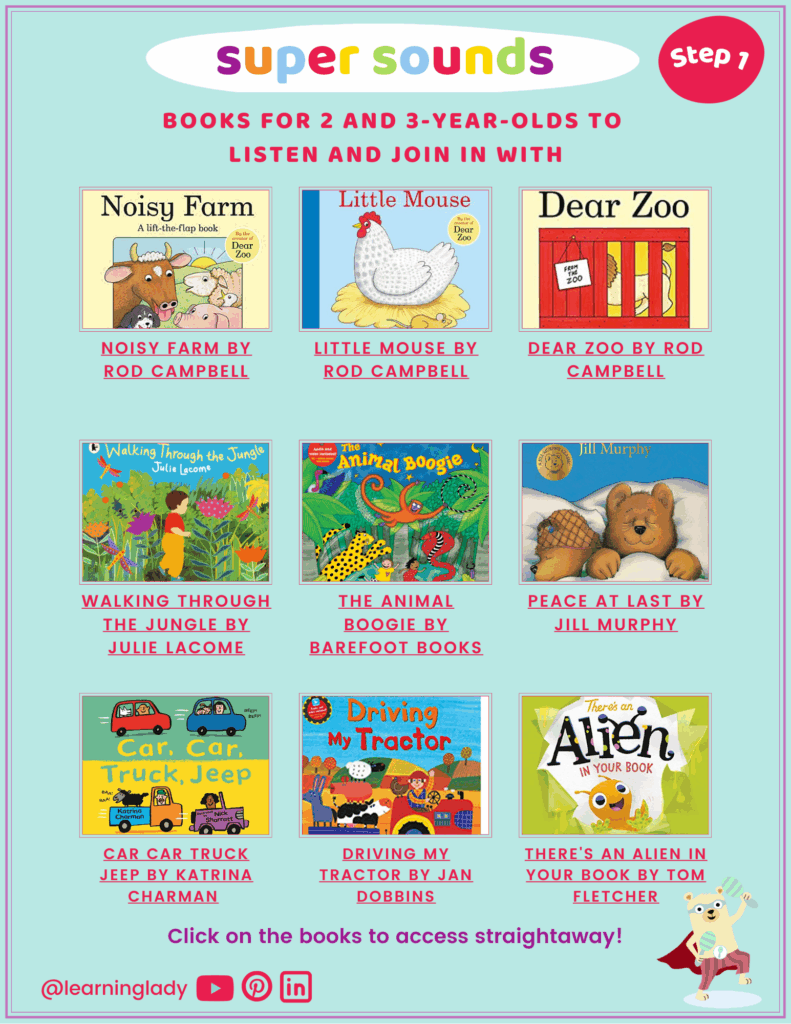
Here are some of the books that I recommended to the staff at Bright Beginnings. You can download your free copy here.
This book list includes over 100 brilliant books, perfect for developing all the prephonic skills 2,3 and 4-year-olds need to be ready for reading.
Phase 1 Phonics | Remembering Sounds
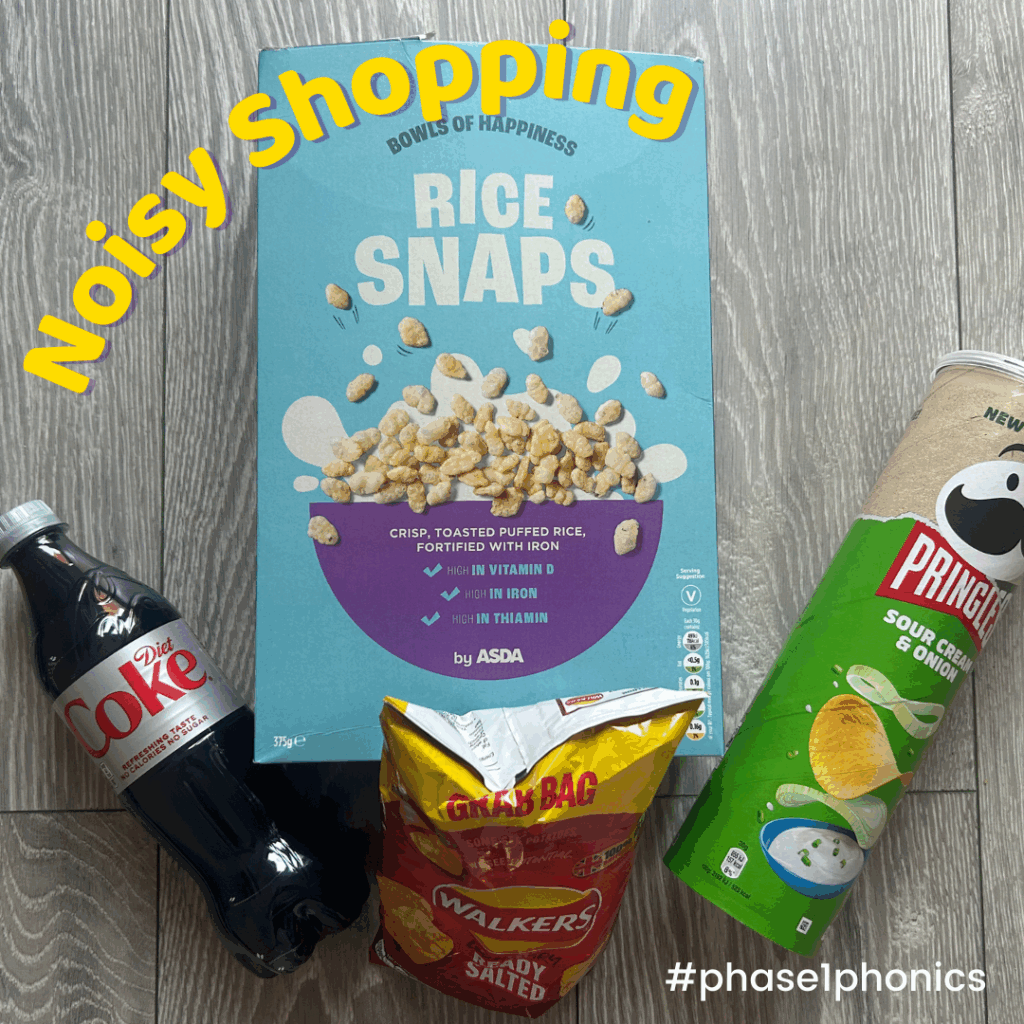
Most 2 and 3-year-olds have been surrounded by a world full of sound from birth, so matching the corresponding objects, people, or animals is not always a challenge. This was true for the little group that troubled the staff at Bright Beginnings.
They recognised that the children could easily match animals and vehicles with their corresponding sounds when they played. However, the children did struggle to recall sounds associated with objects when they were no longer visible.
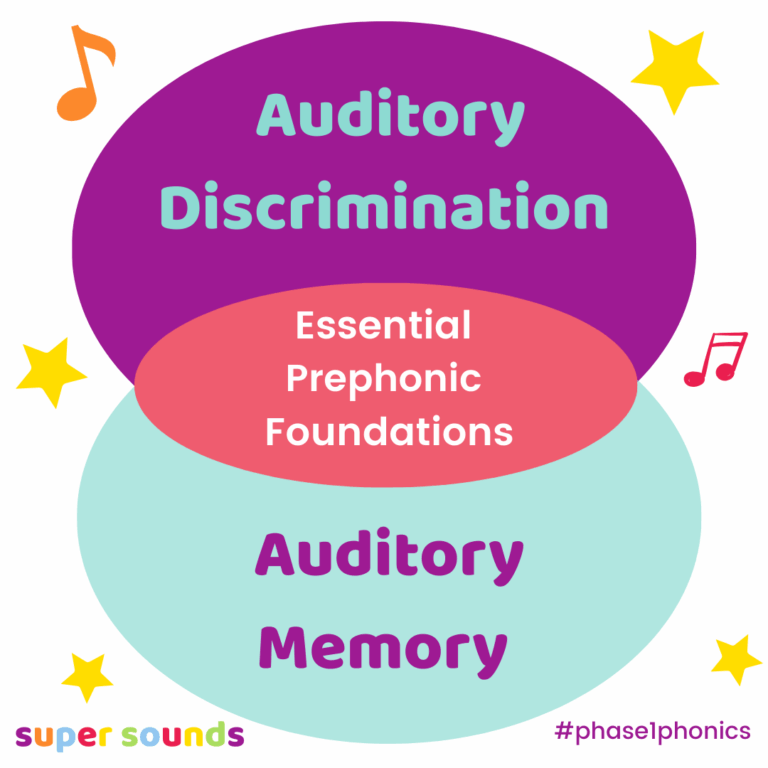
This is a critical step for matching sounds to symbols before school. When phonics teaching begins, children need to be able to match abstract letters and sounds; they’re not real, tangible things. A well-developed auditory memory is therefore vital
What is auditory memory?
Auditory memory is simply the process of remembering what is heard. For example, listening and following simple instructions, processing and answering questions, or learning a new song, all require good auditory memory.
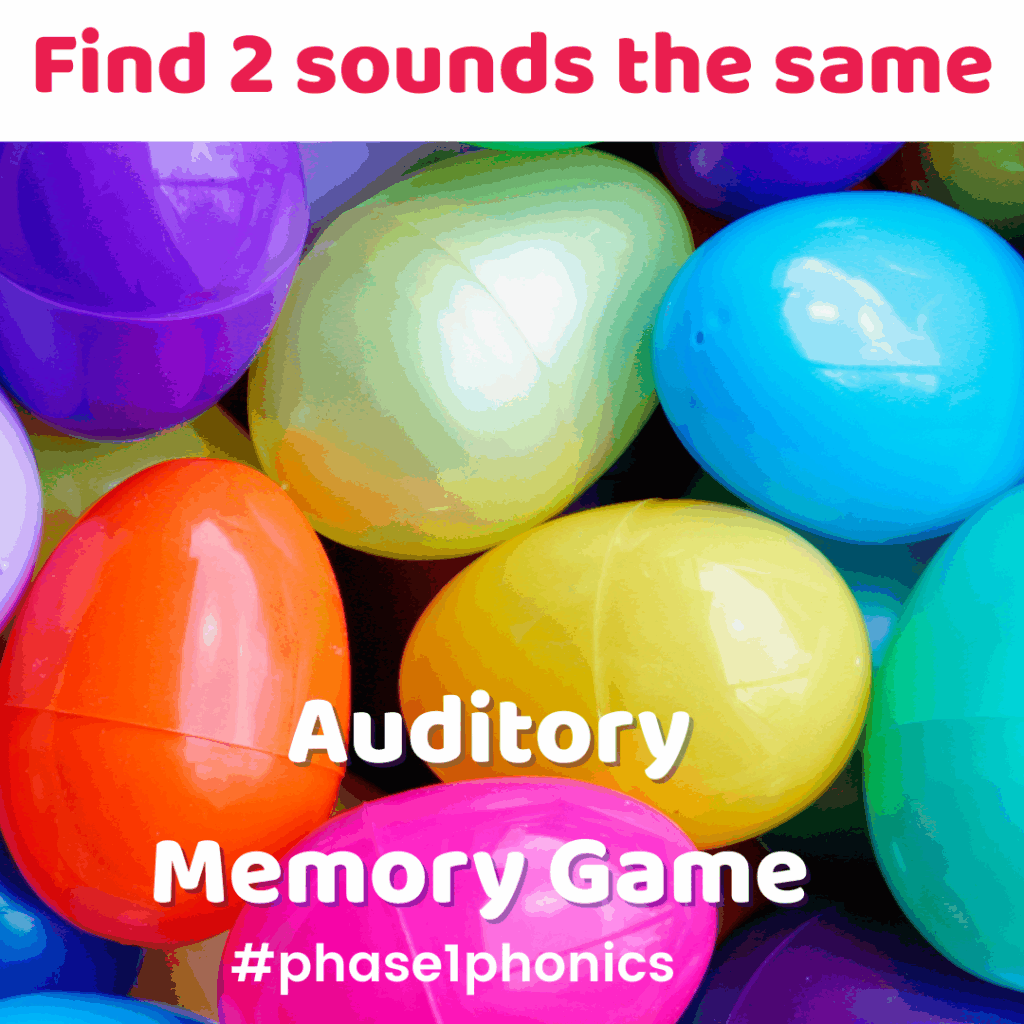
Auditory memory was the skill that the 3-year-olds at Bright Beginnings were struggling with.
It’s much easier to match a sound with an object because there is a point of reference. When the visual is removed, it’s down to the ears and brain to work well together.
5 fun phonic phase 1 games that develop listening and memory
Here are the fun phonic phase 1 games that we introduced at Bright Beginnings to help their 2 and 3-year-olds learn to remember the sounds they heard, without a visual prompt.
These super speedy games can be found in the Super Sounds Prephonics programme and are perfect for improving auditory memory.
The objects making the sounds in these games are always hidden in a bag, box or behind a screen, meaning little ears and brains must work extra hard to listen and remember.
Phonics Phase 1 Game | Pass The Box Game
Like many of the auditory memory games we played at Bright Beginnings, the Pass the Box game begins with a song. This meant that the children were getting the opportunity to remember 3 things:
- Sounds matched to animals
- Song words in order
- Tune matched to the song
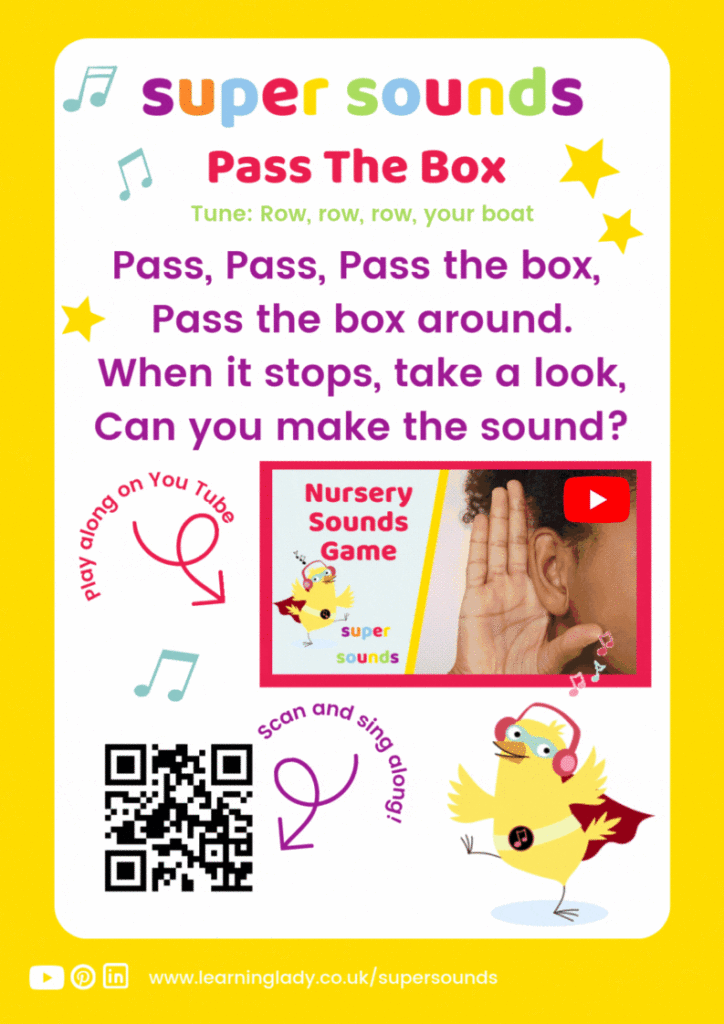
The Pass the Box Song is just one of the featured songs in the free Super Sounds Songbook.
It includes lots of easy-peasy songs that develop essential prephonic skills, including:
- Simple song words
- Instant live streaming links to get started straight away.
Download, print and play for free today!
Phonics Phase 1 Game | Play the Sounds
As the children in the group were very active, it made lots of sense to get them up and moving! The staff at Bright Beginnings didn’t have a speaker, so they used a collection of noisy books matched to small word animals. This was a firm favourite with the children, and they thoroughly enjoyed teaching their friends to play as well.
Phonics Phase 1 Game | Who is it?
This is a great game to play with two adults, especially if your children have favourite characters like Peppa Pig or Santa Claus. You don’t need anything to play this game, but you can make it even more fun by dressing up with character props or using toys as noise-making characters.
Phonics Phase 1 Game | Which Sound?
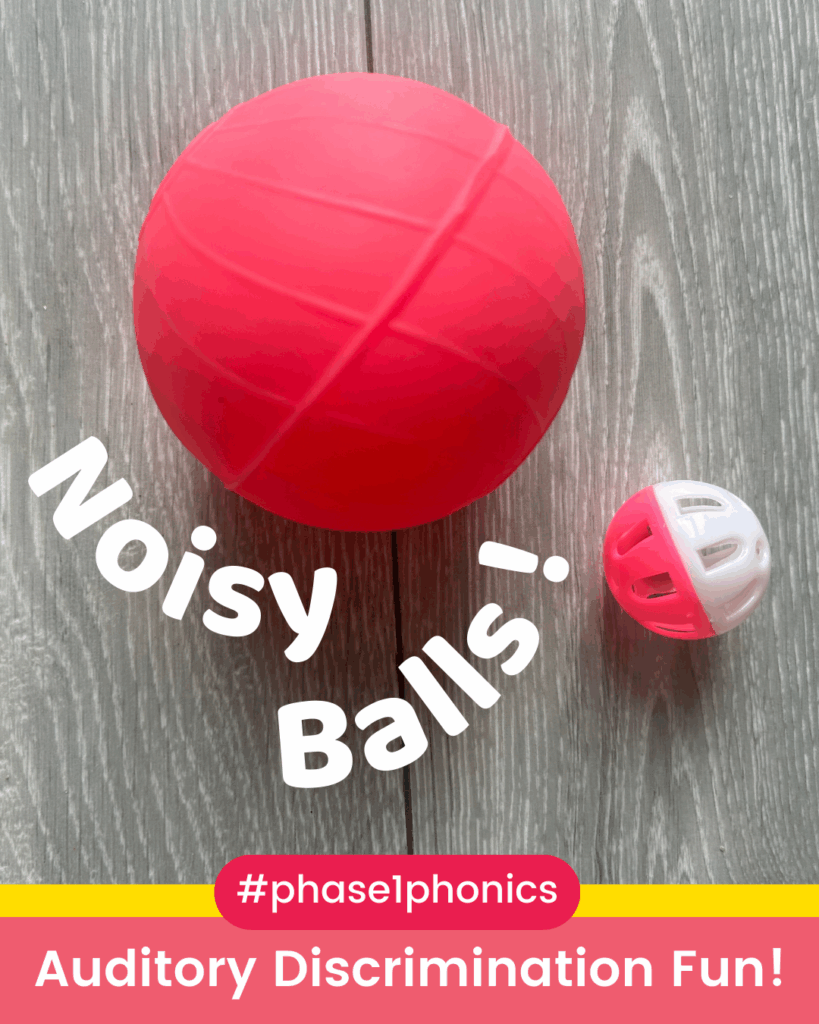
You can use anything that makes a sound for this game. The children at Bright Beginnings particularly loved playing with the noisy balls for cats and dogs. Start playing with sounds that are significantly different, becoming more similar over time as the children’s listening and memory skills improve.
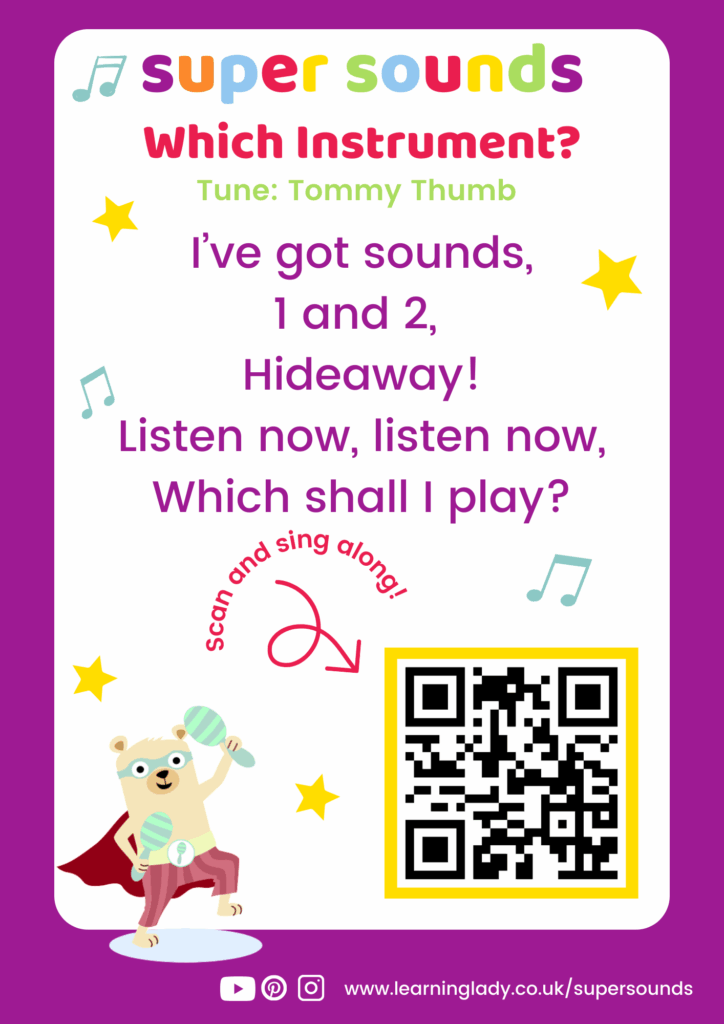
What you need
2 or 3 sound makers of instruments
Create a barrier between you and the children, large enough to hide the sound makers.
- Remind the children of the sounds and object names, saying these all together.
- Explain that the children will be guessing which sound is being played by listening for the sound clues.
- Begin by introducing the Which Instrument song.
- Play one of the sounds from behind the barrier. Can the children guess what is making the sound?
- Challenge children who guess which sound is being played to describe how they know.
Phonics Phase 1 Game : Making Sounds at Home
The staff at Bright Beginnings were always keen to share what the children were up to with their families. Here’s a super speedy, no prep activity that’s perfect for making and matching sounds that can’t be seen, at home or nursery.
Do you have a group of children like the group at Bright Beginnings?
If your 2 and 3-year-olds need to develop essential listening and memory skills and you need some more ideas, it’s time to take a look inside Super Sounds.
It’s the only fun, award-winning prephonics programme of its kind, specifically designed for 2,3 and 4 year olds.
Written by a prephonics expert and perfect for use before every phonics programme, Super Sounds is easy to follow, teaching a progression of prephonics skills step by step, with guaranteed results.
Whether you want fresh ideas as an alternative to Phase 1 Phonics, or you’re new to phonics in nursery and don’t know where to start, Super Sounds is just for you!
Super Sounds Bargain Bundle
Working with 2 , 3 and 4 year olds and want to work with a team of Nursery Phonics Experts?
The Super Sounds Bargain Bundle is exactly what practitioners and Early Years Leaders like you have been looking for. everybody’s been asking for!
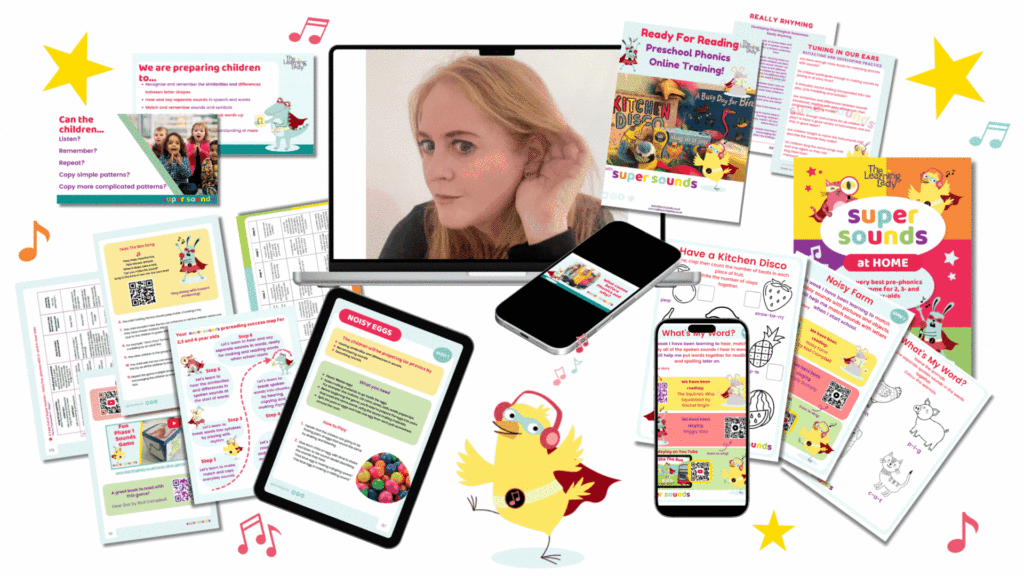
The Super Sounds Bargain Bundle is the super successful, research-based prephonics and alternative Phase 1 Phonics toolkit that’s well loved by thousands of early years providers and their children.
Including:
- Immediate access to on-demand Ready for Reading Nursery Phonics Training
- An instant downloadable copy of the award winning Super Sounds Prephonics programme, that guarantees results.
- Distinctively different downloadable home learning, perfect for busy parents and children who need to keep practising.